

By LMS Personal Injury Lawyers Team | Reviewed by David Capra, Personal Injury Lawyer | Updated August 2026
Key Takeaways
A car accident claim in Ontario usually involves two related paths: accident benefits and, where appropriate, a tort claim against an at-fault driver. The steps below can help you protect your health, meet deadlines, and keep useful records from the first day onward.
- Report the collision promptly and preserve details from the scene.
- Apply for accident benefits using the OCF-1 form when you are injured.
- Follow medical advice and keep records of treatment, expenses, and missed work.
- Treat insurer requests and benefit disputes carefully.
- Get legal advice early if your injuries are serious or your losses may be long-term.
How the Car Accident Claim Process Works in Ontario
The car accident claim process in Ontario generally begins with immediate safety, reporting, and medical care. The province’s no-fault insurance system provides accident benefits that may assist with treatment, rehabilitation, and income replacement regardless of who caused the collision. A separate tort claim may also be available when another person’s negligence caused serious and lasting harm.
These paths are not necessarily alternatives. Accident benefits can address immediate needs while a tort claim, if appropriate, may seek compensation for losses such as pain and suffering, lost income, or future care. The available options depend on the facts, the injuries, the insurance policies involved, and the evidence that can be gathered.
A useful way to understand the sequence is to think of the claim as a continuing record rather than one form filed on one day. The early account, medical notes, receipts, employment information, and communications with insurers can all affect how the claim develops. Our [Ottawa motor vehicle accident lawyers](/ottawa-motor-vehicle-accident-lawyers/) walk clients through this process daily – for a broader explanation of the two compensation routes, see our guide to car accident compensation in Ontario.
Step 1 – At the Scene of the Accident
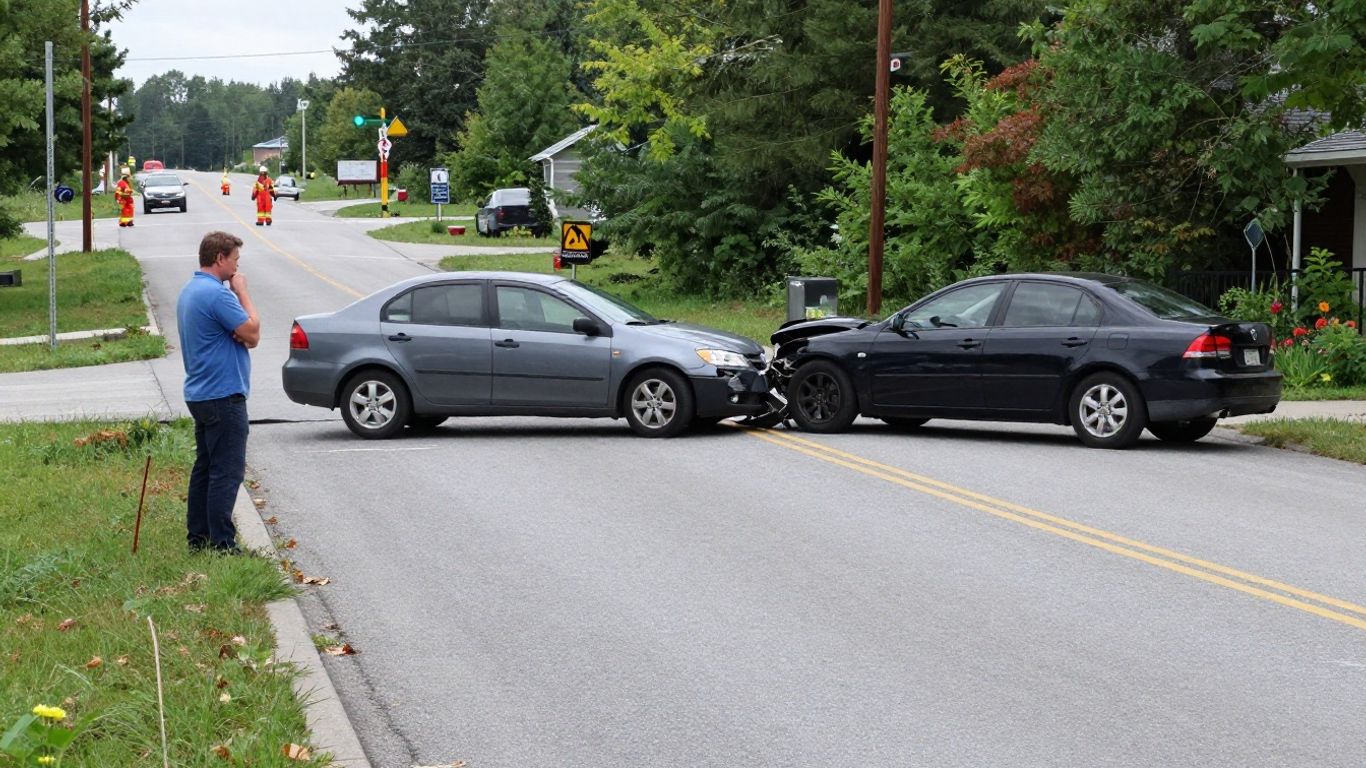
First, check for injuries and call 911 when there is an emergency. If it is safe, move out of the flow of traffic, remain at the scene, and follow police or collision-reporting instructions. Do not speculate about fault or make an admission simply because you are shaken or want to be polite.
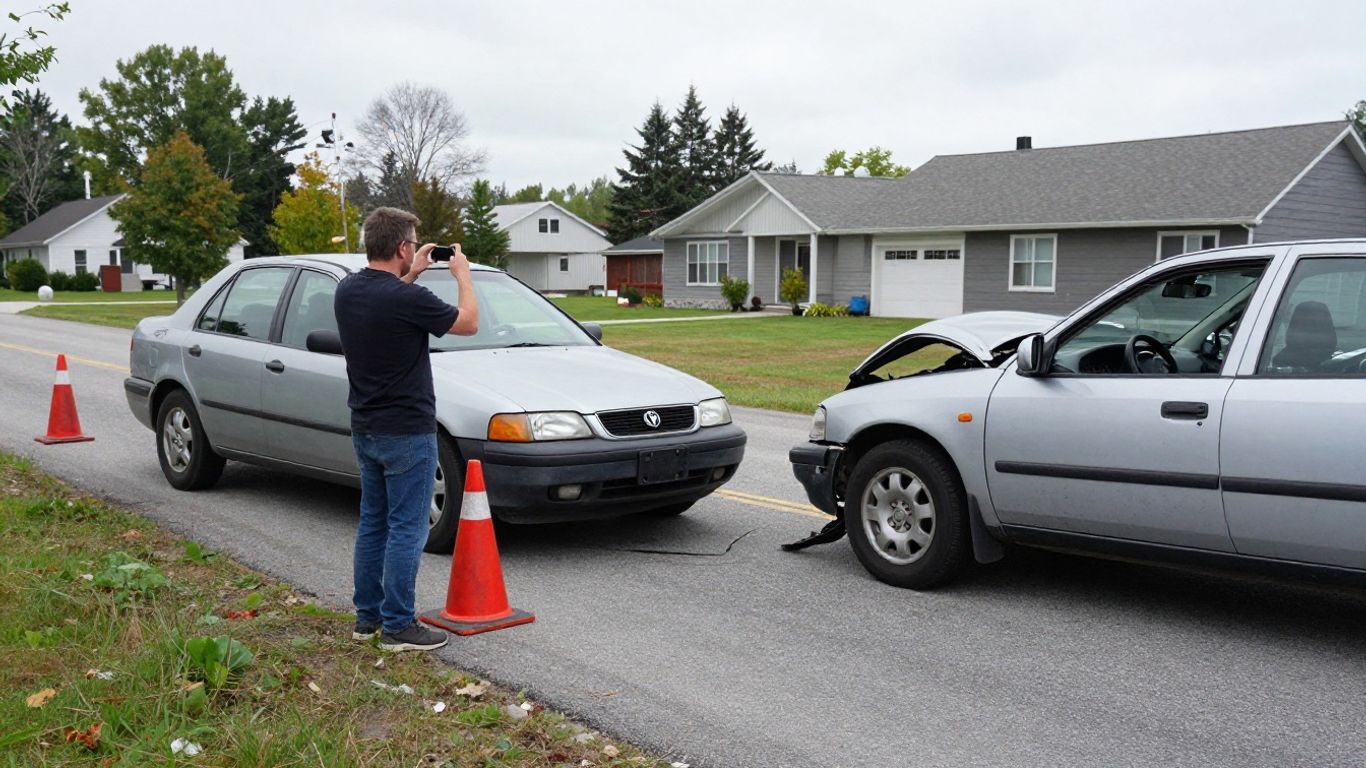
Collect the other driver’s name, contact information, licence details, insurance information, and vehicle particulars. Look for independent witnesses and ask for their contact information. Photos of the vehicles, road conditions, visible injuries, surrounding signs, and the general position of the vehicles can later help clarify what happened.
Write down the date, time, location, weather, traffic, and your own recollection as soon as you reasonably can. Our guide on the first steps to take after a car accident can help you remember the details that are easy to lose in the confusion after a crash. Even where damage appears minor, symptoms can emerge later, so arrange medical attention if you feel pain, dizziness, confusion, or other concerning symptoms.
Step 2 – Reporting the Crash to Your Insurer
Notify your insurer or insurance broker promptly and provide a factual account of the collision. Most policies commonly require timely notice, and the details needed may include the date, location, vehicles involved, police or collision-centre information, witnesses, and any injuries. Ask for the claim number and keep a record of the adjuster’s name and communications.
A report to the insurer is not the same as proving the full value of an injury claim. You can describe what you know without guessing about medical diagnoses, future recovery, or legal responsibility. Save emails, letters, estimates, forms, and notes of telephone calls in one place.
Property damage and bodily injury may be assessed through different parts of the process. The vehicle may be inspected, repaired, or assessed as a total loss under the relevant policy terms, while injury benefits involve medical information and functional limitations. If you are unsure what to say or which documents to provide, obtain advice before signing a settlement or giving a detailed recorded statement.
Step 3 – Filing Your SABS Application (OCF-1)
The OCF-1 is the application for accident benefits under Ontario’s Statutory Accident Benefits Schedule. It asks for information about the accident, the applicant, insurance coverage, employment, and the benefits being sought. The form must be completed carefully because missing information or an incomplete application can create avoidable correspondence and delay.
After receiving the application, the insurer may send additional forms or request information about treatment, income, or the circumstances of the collision. Keep copies of everything submitted and note the date each document was sent. If you do not have your own policy, another policy or the Motor Vehicle Accident Claims Fund may become relevant depending on the circumstances.
The exact benefits available depend on the policy, the injury, and the applicable rules. Treatment plans, income replacement requests, attendant-care issues, and other applications may require separate supporting information. Do not assume that an initial approval or denial settles the question permanently; the claim can change as medical evidence develops.
Step 4 – Getting Medical Treatment and Documenting It
Seek medical care promptly and tell the healthcare provider that the symptoms followed a motor vehicle collision. Follow recommended treatment, attend appointments, and explain changes in pain, mobility, sleep, concentration, mood, or daily function. Medical records often provide the clearest timeline connecting symptoms with the accident and documenting whether they persist.
Keep a simple record of appointments, medications, therapy, travel costs, and tasks you can no longer perform normally. A health journal can capture details that may not fit into a short clinical appointment. Records of missed shifts, reduced duties, lost contracts, and help provided by family members may also become relevant when losses are assessed.
The most useful evidence is usually consistent evidence gathered over time. This personal injury evidence guide discusses medical records, incident documentation, witness information, financial proof, and evidence of the accident’s effect on daily life. The point is not to create a perfect diary; it is to preserve an honest, usable account of your recovery.
Step 5 – Responding to Insurer Requests and Disputes
Insurers may ask for medical records, employment information, examinations, statements, or assessments. Read each request carefully, note any deadline, and ask for clarification when the scope is unclear. Provide accurate information, but do not minimize symptoms or agree that you have recovered simply to make a conversation easier.
If benefits are reduced, refused, or delayed, request the decision in writing and keep the explanation. A dispute may involve the insurer’s interpretation of medical evidence, the necessity of a treatment plan, eligibility for income replacement, or the extent of a functional limitation. The response should address the actual reason given rather than simply repeat that the decision feels unfair.
Accident-benefit disputes in Ontario may proceed through the Licence Appeal Tribunal (LAT), an independent tribunal with its own forms, deadlines, and evidentiary expectations. If your benefits have been reduced, delayed, or denied, call 613-230-5787 to talk through your options before you respond. Before accepting a small payment or signing a release, consider how it affects future treatment and other benefits.

Step 6 – Deciding Whether to Pursue a Tort Claim
A tort claim is a lawsuit against a person or entity whose negligence caused the collision and resulting losses. It is distinct from accident benefits, and it may address damages that accident benefits do not fully cover. The viability of the claim depends on liability, the nature and duration of the injuries, statutory thresholds, and the losses supported by evidence.
The decision should not be based only on the repair bill or the first few weeks of pain. Consider ongoing limitations, income effects, household responsibilities, caregiving needs, treatment requirements, and the possibility of future care. Strict limitation and notice rules also apply, so waiting for a complete recovery before seeking advice can be risky.
A careful assessment includes the collision evidence, medical prognosis, employment records, insurance coverage, and the conduct of everyone involved. Fault may be shared, but partial responsibility does not automatically mean there is no claim. The practical question is whether the evidence and likely damages justify pursuing the separate lawsuit.
Step 7 – Negotiation, Mediation, and (If Needed) Litigation
Many claims are resolved through written negotiations between the parties or their representatives. A demand should explain the injuries, treatment, financial losses, ongoing effects, and supporting evidence. Settlement discussions should be measured against the risks of trial, the strength of the evidence, future uncertainty, and the terms of any proposed release.
Mediation gives the parties a structured opportunity to discuss resolution with a neutral mediator. It is not the same as a trial, and participation does not guarantee settlement. If negotiations fail, litigation may require pleadings, documentary production, examinations for discovery, expert evidence, and eventually a hearing or trial.
The process can take time because the value of an injury claim may not be clear until the medical picture stabilizes. A fair resolution should account for more than an immediate expense. It should also reflect the continuing effect of the injury and the risk that accepting a release may end future rights.
Common Delays in the Claims Process
Claims often slow down when basic information is missing, medical treatment is interrupted, or several insurers disagree about who should respond. Delays can also arise while an adjuster reviews records, a treatment plan is assessed, or the extent of a person’s recovery becomes clearer. Some delays are administrative, while others require a deliberate response.
The following issues are common sources of lost time:
- Late notice to an insurer or missed form deadlines.
- Incomplete medical, employment, or expense records.
- Gaps in treatment without an explanation in the medical record.
- Unclear responsibility between insurers or parties.
- Waiting too long to investigate limitation and notice periods.
A delay does not automatically defeat a claim, but it can make the evidence harder to organize and the explanation more difficult. Keep a dated timeline and follow up in writing when a request or decision remains unanswered. If a deadline may have passed, seek legal advice promptly rather than assuming the matter is over.
Mistakes That Can Slow Down or Derail Your Claim
One common mistake is treating the first conversation with an insurer as an informal chat. Statements can be recorded, summarized, or later compared with medical records. Be truthful and cooperative, but avoid guessing, exaggerating, or offering conclusions about fault and recovery that you cannot know yet.
Another mistake is focusing only on the vehicle and overlooking the injury claim. A person may photograph the bumper but fail to record missed work, medication costs, sleep problems, or the need for household assistance. Small records can matter when they show how an injury affected ordinary life over several months.
Do not sign a release, settle a bodily injury claim, or abandon treatment without understanding the consequences. Also avoid publishing casual social-media updates that could be taken out of context. A steady record, prompt medical care, and advice about deadlines are usually more useful than trying to manage every issue from memory.
How LMS Personal Injury Lawyers Can Help You File Your Claim
Most of the calls we get start the same way: someone has an OCF-1 sitting half-finished, or an insurer has asked for a document they don’t understand, or a deadline is coming up and they’re not sure what it actually requires them to do. That’s the stage where we get involved most often – not after everything has gone wrong, but while the process is still in motion and there’s still time to get it right.
David Capra and our team review the application itself, flag gaps before an insurer can use them as a reason to delay, and track every deadline in your file so nothing lapses while you’re focused on recovering. If a benefit gets denied or reduced, we handle the LAT dispute directly rather than leaving you to interpret the insurer’s letter on your own.
If your case may also support a tort claim, we’ll tell you that plainly – and if it doesn’t, we’ll tell you that too, before you spend time building a case that the evidence won’t support. Contingency fees mean this review costs you nothing upfront either way.
Conclusion
A well-managed Ontario car accident claim begins with safety and honest reporting, then develops through medical care, organized records, benefit applications, and timely decisions about litigation. Because accident benefits and tort claims involve different rules, early advice can help you avoid preventable mistakes while your recovery continues.
Not sure which step you’re on, or whether you’ve missed something? Call 613-230-5787, and David Capra’s team can walk through your file with you – free, and often the fastest way to find out if a deadline is closer than it looks.
Frequently Asked Questions
How soon should I report a car accident to my insurer?
Report the collision promptly and check your policy for its notice requirements. Delayed notice can create questions about coverage or the reason for the delay, especially when injuries are involved.
What is an OCF-1 form?
The OCF-1 is the application used to apply for accident benefits under Ontario’s Statutory Accident Benefits Schedule. It collects information about the collision, the applicant, insurance, employment, and requested benefits.
Can I claim accident benefits if I was partly at fault?
Accident benefits are generally designed to respond without requiring you to prove that another driver caused the collision. Eligibility and the specific benefits available still depend on the facts, policy coverage, and applicable rules.
Can I pursue accident benefits and a lawsuit at the same time?
Potentially, yes. Accident benefits and a tort claim serve different purposes, but the interaction between them can be complex and should be assessed using the facts of the individual case.
What if my insurer denies or reduces my benefits?
Ask for the decision and reasons in writing, preserve the related records, and review the applicable dispute process. A benefit dispute may be brought before the Licence Appeal Tribunal in appropriate circumstances.
How long do I have to start a car accident lawsuit in Ontario?
There are limitation and notice rules that can vary with the circumstances. Some deadlines may be much shorter than the general limitation period, so prompt legal advice is safer than relying on a general rule.
Do I need a lawyer after a minor collision?
Not every collision requires legal representation. Legal advice becomes especially useful when injuries persist, fault is disputed, benefits are denied, losses are significant, or a settlement release is being considered.