

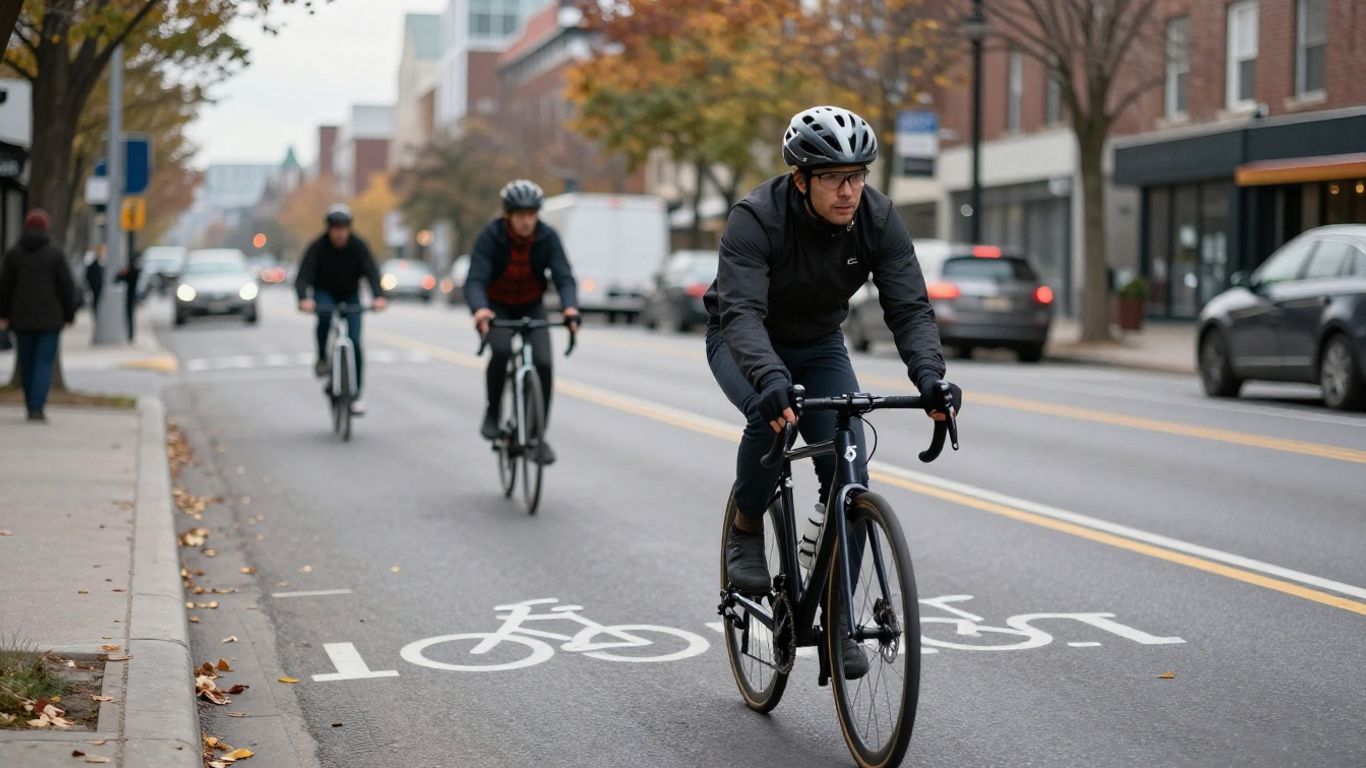
By LMS Personal Injury Team | Reviewed by David Capra, Personal Injury Lawyer | Updated August 2026
Key Takeaways
A bicycle collision can leave you dealing with serious injuries, lost income, damaged property, and difficult insurance questions all at once. The steps you take early can affect both your recovery and your legal options.
- Cyclists may access Ontario accident benefits even when they were not driving a vehicle.
- Liability can involve a driver, a municipality, a property owner, or another party.
- Medical records, photographs, witness details, and expense records can strengthen a claim.
- Notice and limitation deadlines vary, so early legal advice is worthwhile.
- A bicycle accident lawyer can help separate accident benefits from a tort claim and assess the full impact of an injury.
Injured while cycling in Ottawa? Call 613-230-5787 to speak with our team, or contact us online for a free consultation.
Why Bicycle Accidents Are Different From Car Accidents in Ontario
A cyclist has little physical protection in a collision with a motor vehicle. Even a low-speed impact can cause a head injury, fracture, road rash, or a condition that only becomes clear days later. Unlike drivers, cyclists may also have to prove what happened without vehicle damage patterns, airbag data, or a formal exchange of insurance information.
Ontario law does not treat a bicycle collision as a simple property-damage incident. The cyclist’s medical needs, ability to work, and day-to-day limitations may all become part of the claim. The rules can also change depending on whether a vehicle was involved, whether the driver remained at the scene, and whether another hazard contributed to the crash. If a vehicle was involved, our Ottawa car accident lawyer team can walk you through how the claims process applies to your case.
How Ontario’s Insurance Act Applies When a Cyclist Is Hit by a Vehicle
Ontario’s Statutory Accident Benefits Schedule, commonly called SABS, may provide no-fault benefits to an injured cyclist after a motor vehicle collision. These benefits can include medical and rehabilitation support, attendant care in appropriate cases, and long-term disability income replacement in Ottawa where eligibility requirements are met. They are generally pursued through an automobile insurer, even though the injured person was riding a bicycle rather than driving.
The first insurer to contact is not always obvious. A cyclist may have their own automobile policy, live with a family member who has coverage, or need to apply through the insurer of the involved vehicle. A hit-and-run or uninsured-driver collision creates additional complications. Our Ottawa motor vehicle accident lawyers regularly help clients work through exactly this kind of insurer confusion.
Accident benefits are separate from a lawsuit against a negligent driver. Receiving treatment or income-replacement benefits does not automatically settle a tort claim for pain and suffering or future losses. A lawyer can review the available policies, application steps, and evidence before a statement or settlement decision creates problems.
Common Causes of Bicycle Accidents in Ottawa
Ottawa cyclists share roads and intersections with cars, buses, trucks, delivery vehicles, pedestrians, and other riders. Collisions often happen when a driver turns across a cyclist’s path, passes too closely, fails to check before opening a door, or overlooks a rider in a blind spot. Poor lighting, parked vehicles, construction, and seasonal road conditions can make those errors harder to detect and avoid.
Some crashes are caused by a combination of conduct and road design. A driver may have limited visibility, while a bike lane is blocked or a surface is uneven. That does not automatically determine fault, but it can point an investigation toward more than one responsible party.
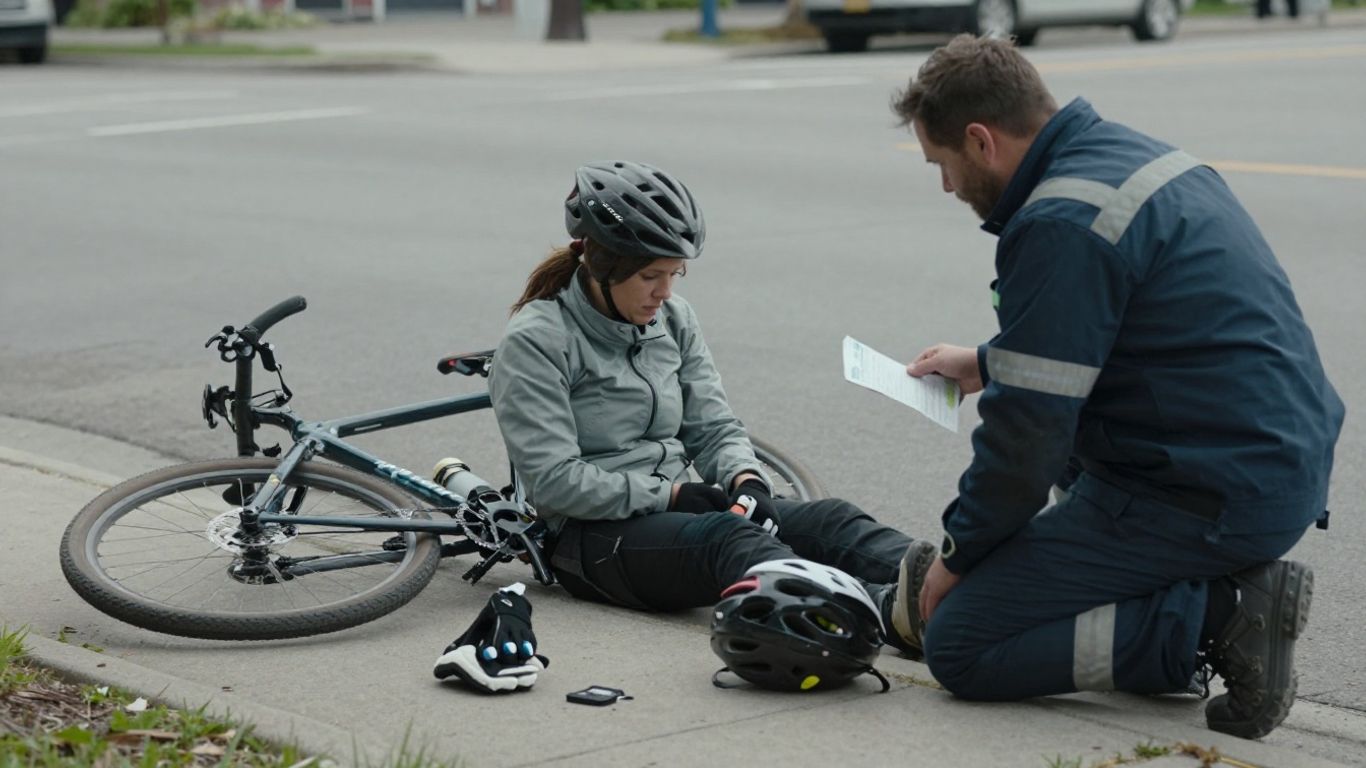
Our guide for pedestrian accident victims can also help explain the broader evidence-gathering process after a collision involving a road user. The legal analysis is not identical for cyclists, but the practical advice about medical care, reporting, and preserving evidence often overlaps.
A Real Scenario: What We See With Dooring Claims
Dooring claims arise when a person in a parked vehicle opens a door into the path of a cyclist. The cyclist may be forced into traffic, strike the door, or fall while trying to avoid it. These incidents can happen quickly, leaving the rider unsure whether to focus on the door, the vehicle’s position, nearby traffic, or the road surface.
A careful review may include photographs of the door and bicycle, the location of the parked vehicle, witness accounts, nearby video, and the cyclist’s route. The driver’s actions, visibility, use of mirrors, and positioning can all matter. A cyclist should avoid guessing about speed or distance when speaking with an insurer; a factual account is more useful than a confident estimate made under stress.
The severity of the injury also deserves attention. A wrist fracture can affect work, while a head injury may affect concentration, mood, and independence long after the visible bruising fades. The full impact may take time to emerge, which is one reason an early settlement should be considered carefully.
Who Can Be Held Liable in a Cycling Accident
The driver is often the first potential defendant, but not necessarily the only one. Liability may involve a motorist who failed to yield, a person who opened a car door, a business whose vehicle was being used negligently, or a party responsible for a dangerous condition. The facts need to be tested rather than assumed from the fact that a cyclist was injured.
Ontario’s negligence rules can also account for conduct by the cyclist. Not wearing a helmet, riding outside a designated area, or making an unexpected movement may be raised by an insurer, but those allegations do not automatically defeat a claim. The effect depends on the evidence and the connection between the alleged conduct and the injury.
Municipal Liability and Notice Period Requirements in Ontario
A collision involving a pothole, damaged pavement, missing signage, or an unsafe cycling route in Ottawa may raise questions about municipal responsibility. Municipal claims have special rules, including notice requirements that can be much shorter than the general limitation period. For certain incidents on municipal property, written notice may be required within 10 days, subject to statutory exceptions.
That short period is not the same as the deadline for starting a lawsuit. A cyclist should record the precise location, take photographs from several angles, and identify whether the road belongs to a city, region, or another authority. Maintenance records, inspection practices, repair history, and weather conditions may later become relevant.
Our Ontario injury time-limit guide is a useful starting point for understanding why deadlines differ between claim types. It should not replace advice about a specific road, authority, or injury, particularly where a notice period may already be running.
What Compensation Can a Cyclist Claim After an Accident
Compensation depends on the injuries, the evidence, the responsible parties, and the interaction between statutory benefits and a lawsuit. Potential losses can include treatment costs, income loss, reduced future earning ability, assistance with daily activities, bicycle and equipment damage, and pain and suffering where the legal threshold is met. Family members may also have claims in some circumstances.
The value of a claim is not determined by the first medical bill or the first insurer offer. A cyclist may need treatment for months, change jobs, reduce hours, or rely on family support. Keeping a running record of those effects can make the financial and personal consequences easier to assess.
Accident Benefits (SABS) vs. Tort Claims: What’s the Difference
SABS benefits are designed to provide specific supports after a motor vehicle accident without requiring proof that another person was at fault. A tort claim is different: it generally requires evidence of negligence and may seek damages from the responsible person or organization. The two processes can run alongside each other, although benefits, deductions, and insurance limits need to be reviewed carefully.
The distinction matters because accepting or resolving one part of a claim does not necessarily resolve every other part. A cyclist should understand what a document releases before signing it. Our guide on evidence needed for an Ontario injury claim also discusses evidence, insurance issues, and the role of legal advice in personal injury matters.
Special Considerations for Catastrophic Cycling Injuries
A catastrophic injury can alter nearly every part of a person’s life. Brain injuries, spinal cord injuries, amputations, and severe multiple fractures may require long-term treatment, home modifications, mobility equipment, attendant care, and changes to employment — see our guide to catastrophic injuries from motor vehicle accidents for more detail. The early medical picture may not capture the cost of those needs over decades.
These cases usually require detailed medical and functional evidence. Lawyers may work with treating professionals and other experts to assess future care, lost earning capacity, rehabilitation, and the effect on family members. It is also important to protect access to available benefits while the larger claim is investigated.
A settlement should account for uncertainty without ignoring it. Future complications, changing care needs, inflation, and the person’s age and work history may all affect the analysis. A rushed agreement can be particularly difficult to revisit after a life-changing injury.
Not sure what your bicycle accident claim is worth? Call David Capra’s team at 613-230-5787 or contact us online — the consultation is free.
Steps to Take Immediately After a Bicycle Accident
Safety comes first. Move out of danger if you can do so safely, call emergency services when needed, and accept medical attention even if symptoms seem manageable. Adrenaline can mask pain, and a timely medical record helps connect later symptoms to the collision.
Report the incident as appropriate and obtain the driver’s name, contact details, licence plate, insurance information, and vehicle description. Ask witnesses for their contact information rather than relying on social media posts or hoping someone else recorded the event. If the driver leaves, note the direction of travel and any identifying details without putting yourself at further risk.
The first hours are also a good time to preserve practical evidence. Our post-accident steps guide covers basics such as photographs, medical care, reporting, and avoiding an admission of fault. Those same habits can be adapted to a bicycle collision.
Documenting the Scene When You Don’t Have “Two Vehicles” to Exchange Info With
A bicycle crash scene can disappear quickly. The bicycle may be moved, a damaged helmet may be thrown away, and a temporary road hazard may be repaired before anyone inspects it. If you are able, take wide photographs showing the road layout and closer photographs showing the damage, clothing, helmet, vehicle, debris, lane markings, and any visible hazard.
Create a short record while the details are fresh. Useful items include:
- The date, time, weather, lighting, and exact location.
- The direction each person or vehicle was travelling.
- Names and contact details for witnesses and responding officers.
- Medical visits, symptoms, medication, and instructions received.
- Repair estimates, receipts, travel costs, and missed work.
That list is not a substitute for investigation, but it prevents small details from being lost. Keep the original photographs and messages, and avoid editing images in a way that removes their date or location information.
After the scene is documented, continue recording how the injury affects ordinary life. A health journal, appointment history, and expense file can help show the difference between the immediate collision and its continuing consequences.
Common Mistakes That Hurt a Cyclist’s Claim
Many claim problems begin with ordinary reactions. An injured cyclist may apologize at the scene, post a simplified account online, or return to work to avoid disappointing an employer. Those actions do not prove fault or recovery, but an insurer may later use them to question the severity or cause of the injury.
Another common mistake is treating a damaged bicycle as the whole claim. Replacement cost matters, yet it may be minor compared with treatment, lost wages, and future limitations. Keep records even when an expense feels too small to matter; patterns become clearer over time.
Why Insurers Often Dispute Fault in Cyclist Cases
Fault disputes can focus on visibility, road position, speed, signalling, helmet use, lighting, or whether the cyclist was predictable. Insurers may also compare different accounts given to police, paramedics, doctors, and adjusters. A discrepancy does not automatically mean someone is dishonest, especially after a frightening impact, but it can create avoidable uncertainty.
Do not provide a recorded statement or sign a broad authorization without understanding its purpose. Be truthful, answer what is asked, and avoid speculation. Our guide on dealing with insurance companies after an accident discusses reporting, dealing with adjusters, and documentation in Ontario claims.
Your medical care should remain the priority. Attend recommended appointments, follow treatment instructions where medically appropriate, and explain ongoing symptoms accurately. Gaps in care can have many explanations, but they may give an insurer an argument that the injury was less serious or unrelated.
How Long Do You Have to File a Bicycle Accident Claim in Ontario
The general limitation period for a personal injury lawsuit in Ontario is often two years from the date of the injury or the date it was discovered, but exceptions and different deadlines can apply. A motor vehicle claim may require notice to an insurer within a short period and notice to an at-fault party within 120 days. A municipal road or property claim may have an even shorter notice requirement.
These deadlines are not interchangeable. Giving notice does not necessarily start a lawsuit, and making an insurance application does not always preserve every legal claim. Minors and people who are mentally incapable may have special rules, but it is risky to assume an exception applies without advice.
Write down the accident date, the date you first noticed significant symptoms, the identities of possible defendants, and every insurer involved. Contacting a bicycle accident lawyer early gives time to preserve video, notify the correct authority, and investigate before evidence disappears.
How a Bicycle Accident Lawyer Helps Build Your Case
A lawyer begins by sorting out what happened and which legal pathways may apply. That can involve reviewing police materials, medical records, photographs, witness accounts, vehicle information, and the cyclist’s own notes. The goal is not simply to assign blame quickly, but to identify the evidence needed to prove responsibility and loss.
The lawyer can also coordinate the accident benefits process while assessing a potential tort claim. This may include communicating with insurers, challenging an unfair benefit decision, arranging records, and explaining documents before they are signed. If another party raises contributory negligence, the response should be grounded in the facts rather than in an emotional argument.
As recovery develops, the case can be valued more realistically. Wage records, tax information, treatment plans, functional limitations, care needs, and the effect on home life may all matter. A lawyer can negotiate with the insurer and, when necessary, prepare the claim for court without forcing a premature decision. Many clients also want to know how legal fees work — see our contingency fee page for a plain-language explanation.
Talk to an Ottawa Bicycle Accident Lawyer Today
If you were injured while cycling in Ottawa, consider getting advice before giving a detailed statement or accepting a settlement. A consultation can clarify which insurer should receive notice, whether a municipal or other claim may exist, and what deadlines need attention. It can also help you understand what records to keep while treatment continues.
Bring whatever is available: photographs, the occurrence number, driver and witness information, medical records, repair estimates, employment details, and insurer correspondence. Do not worry if the file is incomplete. Early information can be organized, and missing evidence may still be located through a focused investigation.
The right next step depends on the facts and the seriousness of the injury. Our founding lawyer, David Capra, and our team can explain the process, identify potential sources of compensation, and help protect your options while you recover.
Call 613-230-5787 today for a free, no-obligation consultation with an Ottawa bicycle accident lawyer, or contact us online and we’ll get back to you promptly.
Conclusion
A bicycle collision can create legal and practical problems that are easy to underestimate in the first few days. Prompt medical care, careful documentation, attention to deadlines, and informed communication with insurers can preserve important options. If the injury is serious or fault is disputed, early advice from a qualified Ontario lawyer can make the path forward clearer.
Frequently Asked Questions
Can a cyclist claim accident benefits after being hit by a car?
Yes, an injured cyclist may be eligible for Ontario accident benefits after a motor vehicle collision, even if the cyclist did not own or drive a vehicle. The correct insurer and available benefits depend on the circumstances.
Does a cyclist have to prove the driver was at fault?
Fault is generally not required to access eligible accident benefits. It is usually central to a tort lawsuit seeking damages from a driver or another responsible party.
What if the driver leaves the scene?
Report the collision to police and seek medical attention. Details such as the vehicle description, licence plate, direction of travel, witnesses, and nearby video may help identify the driver or establish an uninsured or unidentified motorist claim.
Can a cyclist be partly responsible and still recover compensation?
Possibly. Ontario’s contributory negligence rules may reduce compensation to reflect the cyclist’s share of responsibility rather than automatically eliminating the claim.
What evidence is most useful after a bicycle accident?
Medical records, scene photographs, bicycle and clothing damage, witness information, police materials, income records, receipts, and notes about daily limitations can all be useful.
How long does a bicycle accident claim take?
There is no single timetable. Straightforward claims may resolve sooner, while serious injuries, disputed fault, ongoing treatment, and future-care issues can make the process take much longer.
Should I accept an early insurance settlement?
Do not sign a release until you understand what claims it covers and whether your future medical, income, and care needs are known. Independent legal advice from a bicycle injury lawyer can help you assess an offer before it becomes final. Call 613-230-5787 to speak with our team first.